OJAI ART CENTER
  • Home
  • About
    • Membership >
      • Membership Store
      • Newsletters
  • Donations & Memberships
  • Branches
    • Art
    • Dance
    • Film
    • Literary
    • Music
    • Photography
    • Theater
    • Youth
  • Contact Us
  • Art in the Park
    • Exhibitors
    • Sponsorships
  • Classes
  • Special Events
  • Rentals

Film Branch Presents:
​Shadows & Secrets: A Film Noir Series

Picture

Twelve Rare and Restored Classics Illuminate the Screen in Ojai
Sundays, May 3 – July 26, 2026

Individual $10 tickets available at the door or buy a pass to see all twelve films for $75. 

Purchase Full-Series Pass
The Ojai Art Center invites film lovers to step into the dark, seductive world of classic cinema with “Shadows & Secrets: A Film Noir Series,” a twelve-week celebration of one of Hollywood’s most enduring genres. Curated and presented by film historian Steve Grumette, the series runs most Sunday evenings at 7:00 p.m. from May 3 through July 26 at the Ojai Art Center Theater.

Unlike many noir retrospectives that revisit the same well-known titles, “Shadows & Secrets” showcases rare, restored, and rediscovered films—many unavailable to general audiences for decades. The series offers audiences a chance to experience these atmospheric classics on the big screen, in the dark, surrounded by fellow film lovers.

“Film noir is not just a genre—it’s a state of mind,” curator Steve Grumette said. “These films were created by artists who had witnessed the darker side of human nature and turned it into unforgettable cinema. I wanted to bring Ojai audiences films they’ve almost certainly never seen, presented in restorations that have never looked better.”

Featured Films

The twelve-film lineup spans the golden age of noir, highlighting powerful performances, groundbreaking direction, and unforgettable cinematography.

May 3 - The Strange Love of Martha Ivers (1946) Barbara Stanwyck plays one of noir's most dangerous women — not a villain exactly, but someone who made a terrible choice long ago and has been building her life on top of it ever since. Watch for Kirk Douglas, making his film debut, stealing scene after scene from two of Hollywood's most seasoned performers.

May 10 - The Hitch-Hiker (1953) The first American film noir directed by a woman. Ida Lupino strips the genre to its bones: two men on a fishing trip pick up the wrong hitchhiker, and what follows is a sustained exercise in claustrophobia and dread that never once releases its grip. Lupino, who directed eight films in all, understood that real menace is quiet, not theatrical.
​
May 17 - Scarlet Street (1945) Fritz Lang fled Nazi Germany in 1933 and brought the visual language of German Expressionism with him to Hollywood. In Scarlet Street he turns it on the most ordinary of subjects — a meek, middle-aged Sunday painter who falls for a woman who is entirely wrong for him — with merciless results. The film was briefly banned in several cities on release. It retains its power to disturb.

May 24 - Kansas City Confidential (1952) A wrongly accused man hunts the real criminals through a labyrinth of double-crosses. What makes this film special is its structure: the mastermind has designed the crime so that none of the participants know who the others are. Watching it unravel is enormously satisfying. Lean, mean, and relentless.

May 31 - The Naked City (1948) Producer Mark Hellinger took his entire production onto the streets of New York and made a murder investigation feel like a documentary. The result changed the way movies were made. The narration was written and recorded by Hellinger himself — who died of a heart attack before the film was released, at forty-one years old. Consider it his letter to the city he loved.

June 7 - Panic in the Streets (1950) Elia Kazan pushes the noir formula somewhere unexpected: a murder victim turns out to be carrying pneumonic plague, and a public health officer has 48 hours to contain the outbreak without panicking New Orleans. The city sweats, the bureaucracy snarls, and the clock runs down. Watch for Jack Palance in one of his earliest film appearances.

June 14 - He Walked by Night (1948) Cinematographer John Alton shot in black and white the way a painter works — light was not something merely used to illuminate his subjects but something he sculpted. On a large screen with high-quality digital projection, the detail in those shadows becomes visible for the first time. The climax in the Los Angeles storm drains is one of the great sequences in American cinema — and almost certainly influenced Carol Reed when he shot the sewer chase at the end of The Third Man just one year later.

June 21 - Woman on the Run (1950) For decades this film was nearly impossible to see — it circulated in damaged, faded prints, largely unknown even to noir enthusiasts. Then it was restored, and audiences finally got to see what they had been missing: a film that works simultaneously as a thriller and as a quietly devastating study of a marriage. Ann Sheridan is remarkable as a wife who discovers, while searching for her missing husband, that she may not know him as well as she thought.

July 5 - Too Late for Tears (1949) This film was rescued from near-oblivion by the Film Noir Foundation, and audiences who see it understand immediately why the Foundation considered it worth saving. Lizabeth Scott plays a woman who, handed a suitcase full of money at the beginning of the film, reveals in that single moment of decision exactly who she is. She may be the most purely ruthless figure in all of noir, and the film never once apologizes for her.

July 12 - The Prowler (1951) Directed by Joseph Losey and written by Dalton Trumbo — both blacklisted shortly after. Van Heflin plays a police officer who is something considerably worse than a criminal: a man of ordinary ambition who is willing to do anything to get what he wants. The corruption at the center of this film isn't exotic. It's ordinary. And that's what makes it stick.

July 19 - Raw Deal (1948) John Alton's second film in the series, and the images alone are worth the price of admission. But what elevates Raw Deal above most noir is its narration — delivered not by the protagonist but by the woman who loves him and knows she may be losing him. Claire Trevor, who won the Academy Award the same year this film was made, breaks your heart with her voice alone.​

July 26 - The Big Combo (1955) John Alton's third film in the series, and his most audacious. There are shots in this film that should not be possible — pools of light so precise, shadows so deep, that you find yourself wondering how any image that dark could have registered on film at all. Noir distilled to its essence. The perfect end to twelve weeks of shadows.

    Get Updates On Film Branch Events

Subscribe to Newsletter

Past Film Branch Screening Trailers

Home Movie Day 2014 trailer -- Ojai, California! from jacethecrowl on Vimeo.

Past Film Branch Screenings

Picture
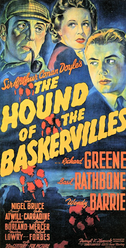
THE HOUND OF THE BASKERVILLES
Picture
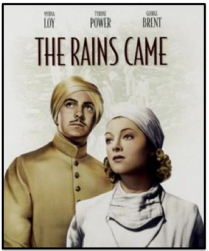
1939 Academy Award Winner For Special Effects THE RAINS CAME
Picture
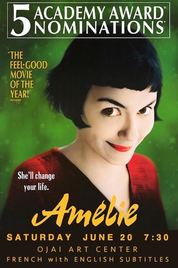
AMMELIE
Picture
PUMP
Picture
FINNEGANS WAKE
Picture
BEYOND THE SURFACE
The Ojai Art Center is located at:
113 So. Montgomery St.
Ojai, CA 93023
805-646-0117   Email
OAC Hours: 
Tuesday - Friday 10 am - 4 pm
Saturday & Sunday Noon - 4 pm
Closed Mondays
Mailing address P.O. Box 331, Ojai CA 93024
  • Home
  • About
    • Membership >
      • Membership Store
      • Newsletters
  • Donations & Memberships
  • Branches
    • Art
    • Dance
    • Film
    • Literary
    • Music
    • Photography
    • Theater
    • Youth
  • Contact Us
  • Art in the Park
    • Exhibitors
    • Sponsorships
  • Classes
  • Special Events
  • Rentals